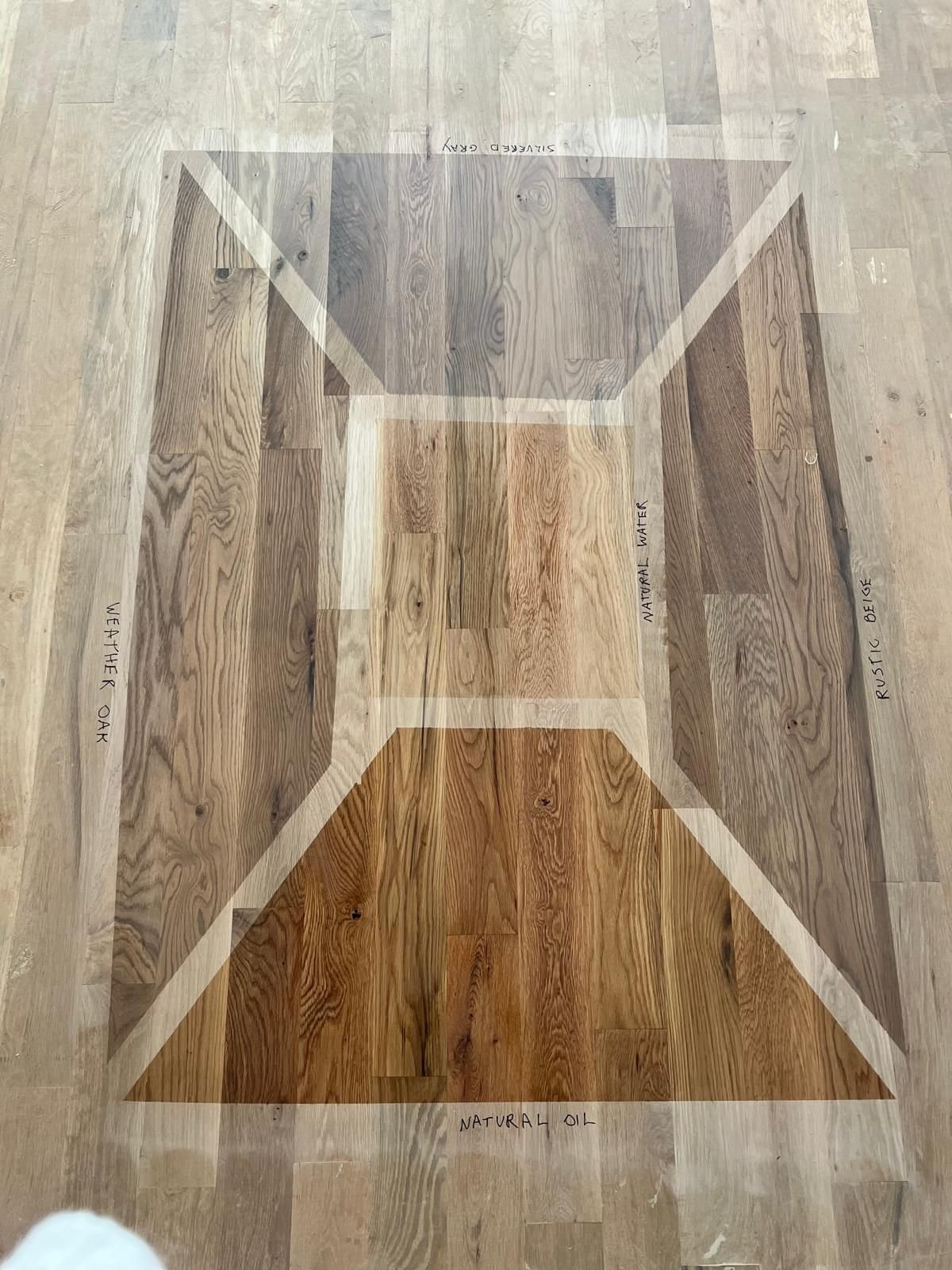
The photos in this post are real samples our crew applied on a sanded white oak floor, with the name of each color written next to it. Color names change from brand to brand, so think of these as styles more than exact products. We can match the look you like with the products we use.
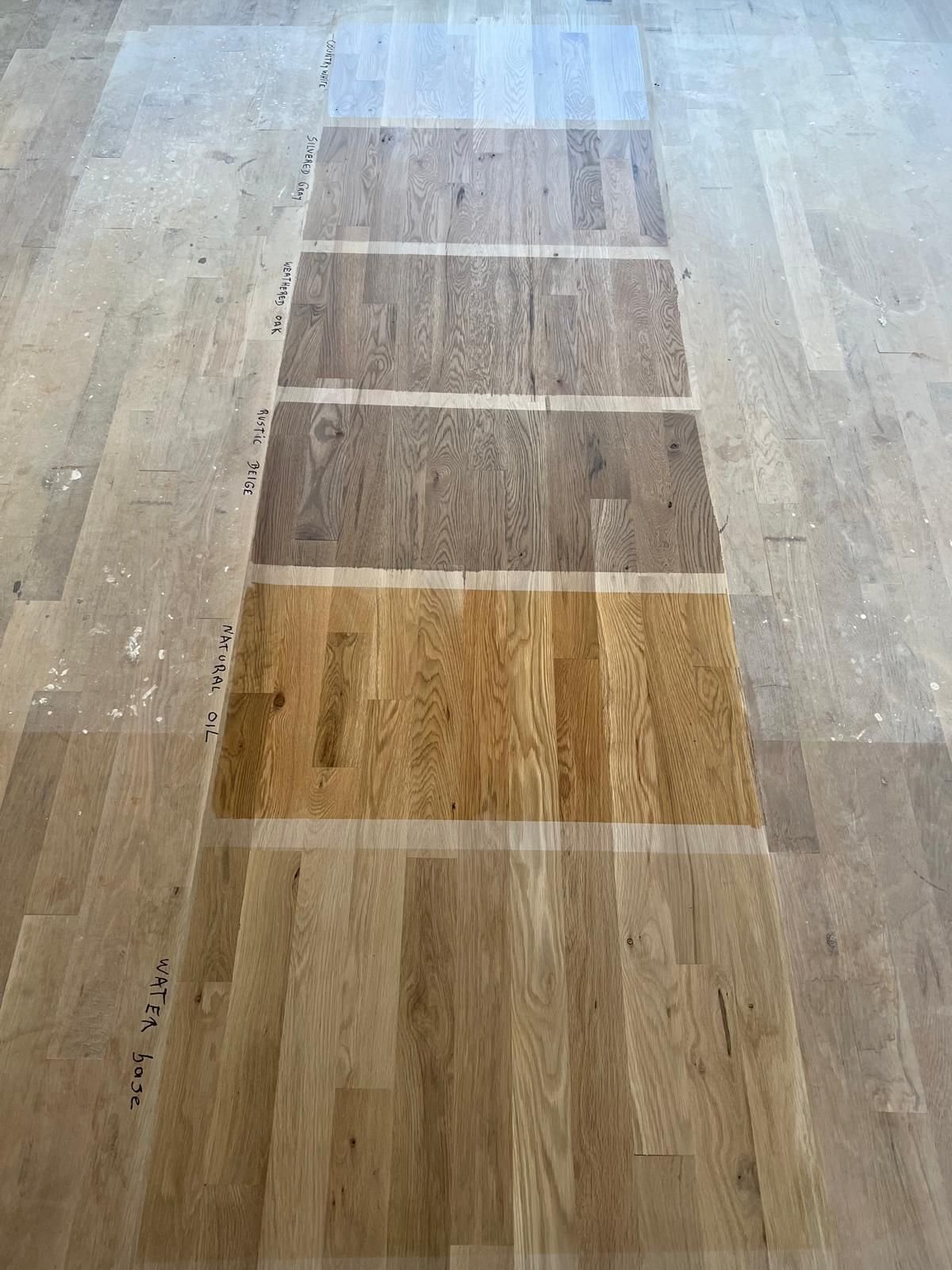
Natural (water-based finish)
No stain at all, just a clear water-based finish. White oak stays light and honest, with a soft, slightly creamy tone. It is a favorite for modern and Scandinavian-style homes, and it keeps the grain easy to see.
Natural Oil
A warm, golden glow that brings out the grain. It feels classic and cozy, and it pairs well with white trim and warm wood cabinets. Expect more amber than the water-based look.
Country White
A white-washed look that brightens the room and softens the grain. It works well in coastal or farmhouse styles and in rooms that do not get much daylight.
Silvered Gray
A cool, light gray that keeps some of the wood’s warmth underneath. It looks great with gray, white or black finishes around the house. Gray tones change a lot with light, so this is one to test in your own room.
Weathered Oak
A soft gray-brown, like driftwood. It sits between gray and brown, which makes it one of the easiest colors to live with. It hides everyday dust and pet hair well.
Rustic Beige
The deepest of the six: a greige brown with a relaxed, lived-in feel. It adds warmth without going dark, and it works in both traditional and modern homes.
How to choose your color
- Test on your own floor. The same stain looks different on white oak and red oak, and even on two white oak floors. Red oak, for example, has a pinkish undertone that changes how a stain reads.
- Look at the samples morning and evening. Daylight, warm bulbs and cool LEDs all shift the color.
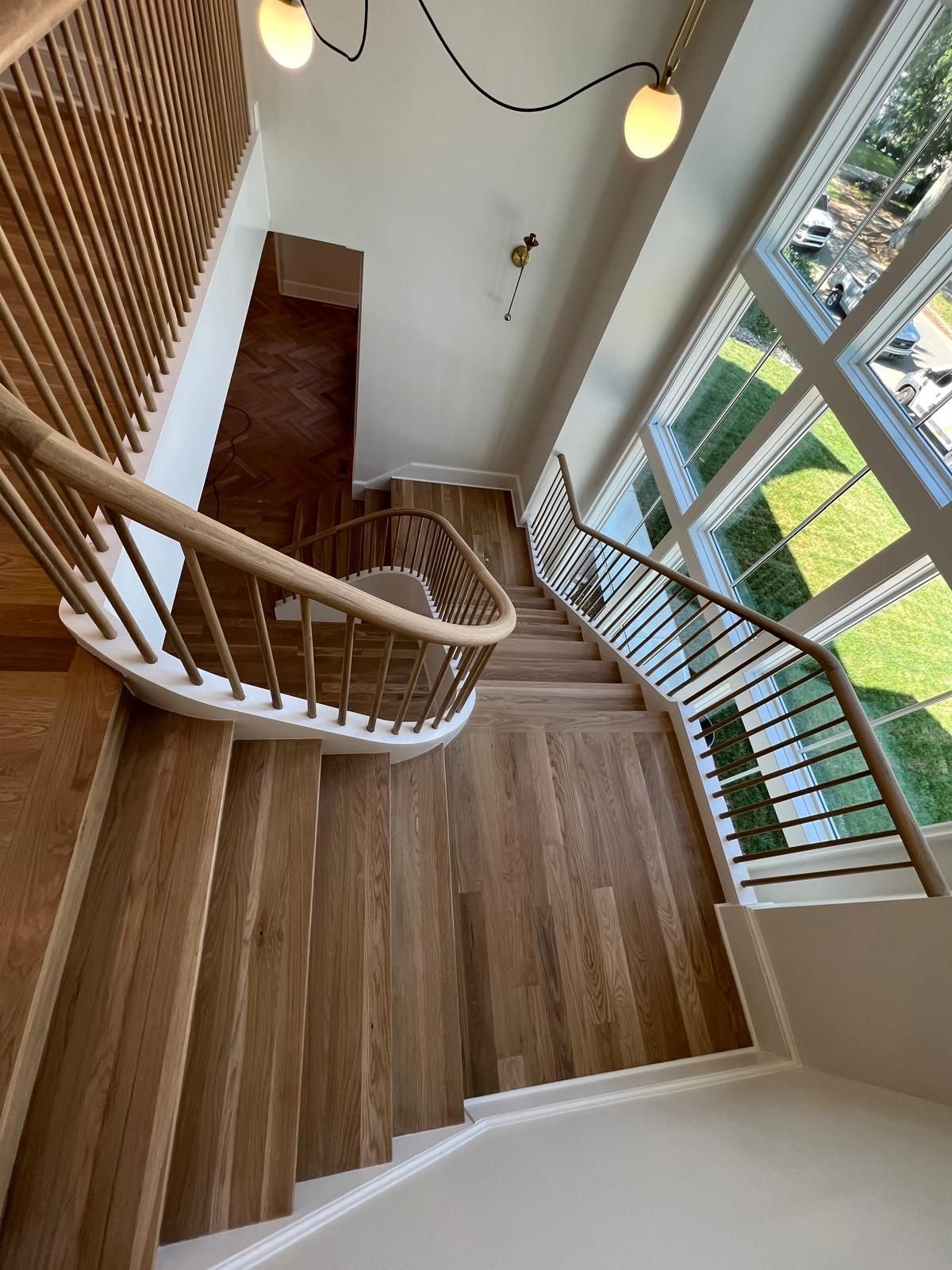
- Look at what stays. Cabinets, stair rails, trim and wall colors should work with the floor.
- Remember the finish changes it too. A sample on raw wood gets a little richer once the finish coats go on top.
Want a head start? Try these colors in our floor visualizer with a photo of your own room. It is an approximation, but it helps narrow the choice before we bring the real samples.